Pickleball Business ·
Picklr's Chapter 11 Exposes The Hidden Cost Of Pickleball Leases
The Picklr's Chapter 11 filing, driven by lease guarantees on roughly 40 early franchise sites, shows how fast facility growth can turn a royalty model into real estate risk.
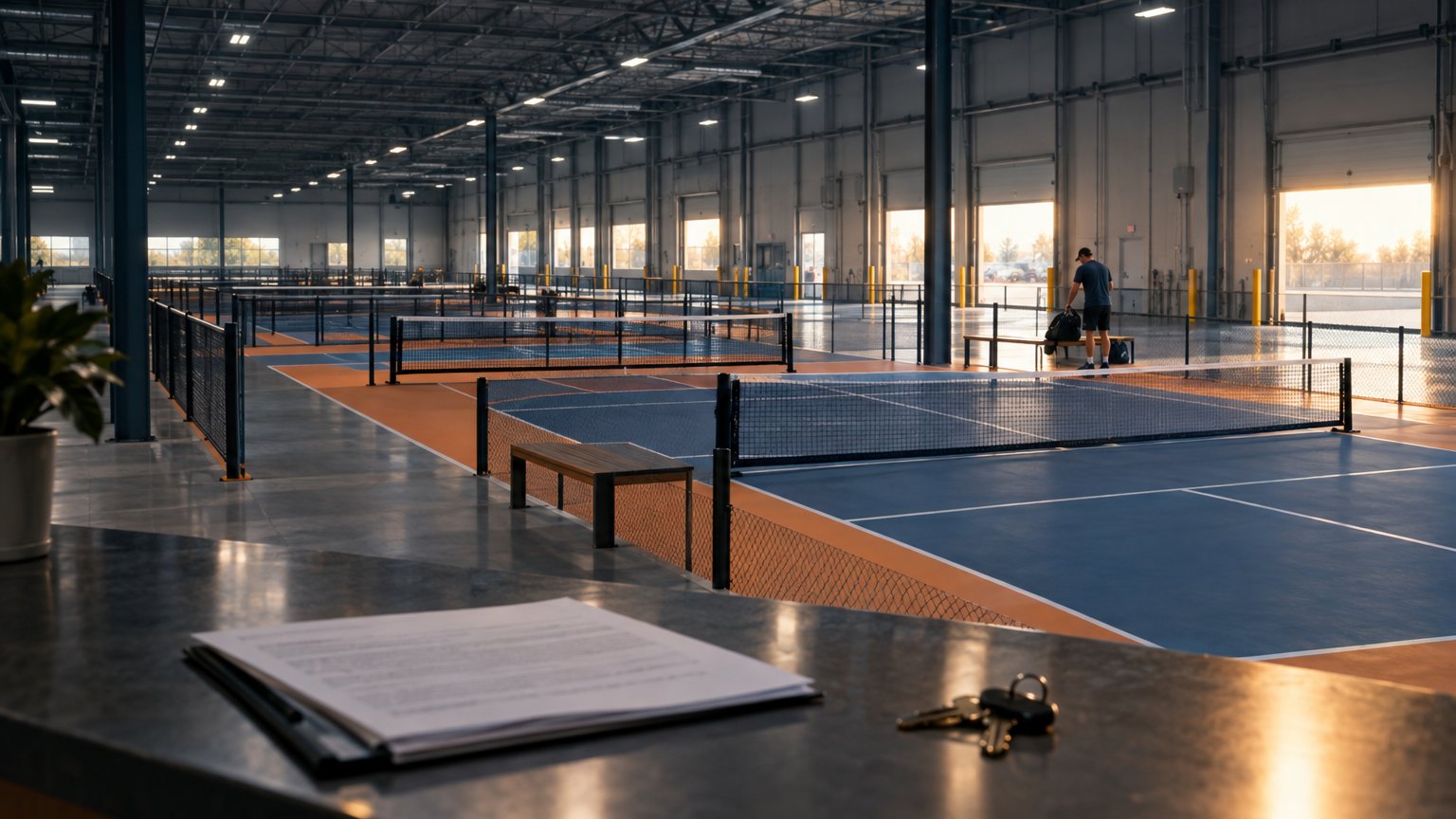
The Picklr, one of the largest indoor pickleball franchise networks, filed for Chapter 11 protection on October 9 in the U.S. Bankruptcy Court for the Northern District of Texas. The trigger was paper, not empty courts: corporate guarantees on facility leases for roughly 40 early franchise locations, according to founder and chief executive Jorge Barragan.
"We signed, unfortunately, too many corporate guarantees that landed on the holding company, and that's on us. I own it," Barragan told Sports Business Journal. The filing covers the parent, Picklr Inc., not its operating subsidiaries or independently owned clubs, which the company says remain open. Dynamus Alliance, an investor group led by franchisee Tom Neale, has committed $4.5 million in debtor-in-possession financing subject to court approval, according to the company, while SBJ put the commitment at $4.8 million.
The guarantee structure explains the strain. Franchisors often lend their balance sheet to help new operators win landlord approval for big-box sites. In a fast build-out, that support turns a royalty business into a real estate exposure. Seven contingent guaranty claims listed in the filing total about $783,000, according to the International Association of Pickleball and Padel Facilities, although those figures do not establish final liability.
The backdrop is demand that grew faster than the economics were tested. U.S. participation reached 24.3 million in 2025, up from 4.2 million in 2020, according to the Sports & Fitness Industry Association. Yet operators are finding local ceilings. An 18-court indoor PickleRage facility in Plainfield, New Jersey, closed in September, less than a year after opening, and a multi-unit Picklr franchisee group filed its own Chapter 11 cases in Florida on September 24.
David Johnson, chief executive of the IAPPF, called the rescue a vote of confidence from insiders. "I am pleased to see an investor group, with inside knowledge and experience, step up with interim financing," he said.
For investors and operators, the lesson concerns capital structure rather than the sport. Underwrite each club on its own lease, cap franchisor guarantees, and price courts against a realistic radius of paying members instead of national participation headlines. In Asia, where Picklr partners in Japan and Australia continue to operate and rents in cities such as Hong Kong are high, shorter leases, shared-use venues and partnerships with malls and schools may prove more durable than big-box copies of the American model.
A shakeout does not end a sport; it sorts its builders. Those who match growth to sustainable foundations protect players, communities and capital, and that discipline is how sport serves The Greatest Good.
中文版
Picklr 申請破產保護,揭示匹克球場館租約的隱藏成本
室內匹克球特許經營網絡之一 The Picklr,於10月9日向美國德州北區破產法院申請第11章破產保護。觸發點並非球場空置,而是一紙紙文件:創辦人兼行政總裁 Jorge Barragan 表示,公司為約40個早期加盟場館的租約提供了企業擔保。
Barragan 向《Sports Business Journal》坦言:「很遺憾,我們簽了太多最終落在控股公司身上的企業擔保,這是我們的責任,我承擔。」是次申請只涉及母公司 Picklr Inc.,不包括其營運附屬公司及獨立擁有的球會,公司表示各球會照常營業。據公司公布,由加盟商 Tom Neale 牽頭的投資者組合 Dynamus Alliance 已承諾提供450萬美元的「債務人持有資產」融資,尚待法院批准;《SBJ》則報道承諾金額為480萬美元。
擔保結構解釋了壓力來源。特許經營商往往以自身資產負債表協助新營運商取得大型商場或倉庫業主的批准。在快速擴張期間,這種支持會悄然把一門收取專利費的生意,變成一項房地產風險。據國際匹克球及板式網球場館協會(IAPPF)指出,破產文件列出七項或有擔保索償,合共約78.3萬美元,但這些數字並不代表最終責任。
背景是需求增長快於經濟模式的驗證。據美國體育及健身產業協會數據,美國參與人數由2020年的420萬增至2025年的2,430萬。然而,營運商正逐步觸及地區上限。新澤西州 Plainfield 一個擁有18個球場的 PickleRage 室內場館於9月結業,開業不足一年;另一個多單位 Picklr 加盟集團亦於9月24日在佛羅里達州申請第11章破產保護。
IAPPF 行政總裁 David Johnson 視這次注資為最熟悉數字的人投下的信心一票:「我很高興看到一個具備內部知識和經驗的投資者組合,挺身提供過渡融資。」
對投資者及營運商而言,教訓在於資本結構,而非運動本身。每個球會應以其自身租約獨立評估,限制特許經營商的擔保,並按實際可觸及的付費會員範圍為球場定價,而非依賴全國參與人數的標題數字。在亞洲,Picklr 於日本及澳洲的合作夥伴繼續營運,而香港等城市租金高昂,較短租期、共用場地,以及與商場和學校合作的模式,或比照搬美國的大型倉庫模式更具持久力。
洗牌不會終結一項運動,只會篩選建設者。能讓增長與穩健根基相匹配的人,同時保障球員、社區與資本,而這份紀律,正是體育成就「至善」之道。
Published by LIT Sports Global, the Hong Kong sports investment and management group. Open this post in the interactive site · Visit the homepage