Pickleball ·
Toronto Builds Pickleball at Civic Scale
Toronto’s newest purpose-built pickleball complex shows how municipalities are turning court supply into a participation product: accessible, bookable, and built for repeatable programming.
Toronto is treating pickleball less like a trend and more like civic infrastructure.
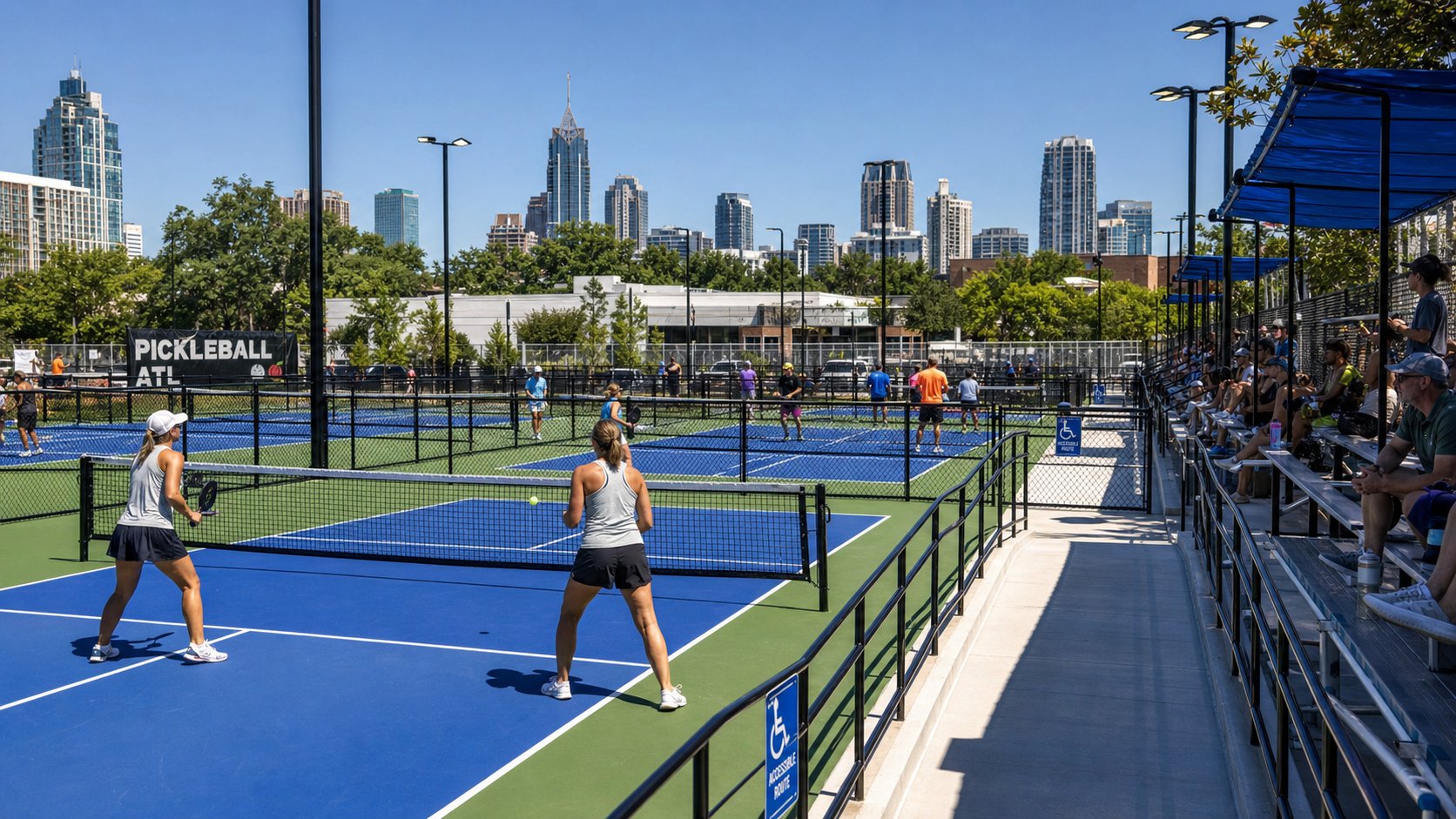
The city has opened a purpose-built pickleball complex at Main Sewage Treatment Playground, a 25,000-square-foot site with 11 dedicated, wheelchair-accessible courts, plus shade, upgraded fencing and bleacher seating. The location details matter because they hint at a new operating model for public racquet sports: not a few striped lines on a multipurpose pad, but a facility built for volume, visibility and predictable scheduling.
Mayor Olivia Chow framed the project as part of her “Back on Track” program, emphasizing accessible recreation and barrier-free participation. Toronto-Danforth councillor Paula Fletcher said local community groups were already booking the courts, supported by funding allocated in the mayor’s 2026 budget. In a sport increasingly defined by private clubs and branded leagues, a city deciding to build at this scale sends a clear signal about long-term demand.
For operators, the takeaway is that the competitive set is widening. Public inventory is no longer only a feeder system for private memberships; when a municipality builds dedicated courts with amenities and consistent access hours, it competes directly for casual players, lessons, small events and sponsorship attention. It also raises the baseline for what players expect in surface quality, lighting and spectator comfort.
“One of the quiet growth levers in pickleball is that good facilities reduce churn,” said a North American racquet-sports venue consultant who advises cities and private developers on utilization. “If a venue is accessible, safe and bookable, people come back weekly and they bring friends. That repeat behavior is what turns participation into a durable market.”
Investor implications sit downstream. Better public supply can cap peak-time pricing power at some private venues, but it also expands the addressable base for equipment, coaching platforms, event promoters and travel-style tournaments. The next winners will be those who can align with public partners on programming, maintenance and community outcomes, rather than only selling court time.
Pickleball’s business is moving from novelty to systems: permitting, bookings, surfacing, instruction and events. Toronto’s decision to build a purpose-built complex adds another proof point that the next growth wave is about operations, not hype. Brands, clubs and tours that align with public partners on programming, upkeep and community outcomes will earn trust and distribution that paid media cannot buy. If the sport is to scale responsibly, the winners will be those who treat access as the product and design for inclusion toward The Greatest Good. #LITSportsGlobal #pickleball #TheGreatestGood
中文版
多倫多以城市規模建匹克球場
多倫多正把匹克球當成城市基建,而不只是短期熱潮。
市政府在 Main Sewage Treatment Playground 啟用一個專用匹克球場,佔地約 25,000 平方呎,設有 11 面專用且可供輪椅使用的球場,並增設遮蔭設施、改善圍網與入口,以及提供看台座位。這些細節反映了一種新的公共營運思路:不再只是把多用途場地畫幾條線,而是以『高吞吐量、可見度與可預測時段』為目標,打造可持續的球拍運動場館。
市長鄒至蕙(Olivia Chow)把項目納入其 “Back on Track” 計劃,重點放在更易達、無障礙的康樂空間。多倫多丹佛斯區議員 Paula Fletcher 表示,社區團體已開始預約使用,而工程亦受惠於市長在 2026 年預算中安排的資金。當私營會所與職業聯盟正在拉高品牌化與會員制門檻之際,一座城市選擇以如此規模投資,等同向市場確認:需求並非曇花一現。
對營運者而言,競爭格局正在擴闊。公共場地不再只是私營會員的『導流入口』;當市政府提供專用球場、配套設施與穩定開放時段,它會直接分流休閒玩家、初學課程、小型活動,甚至本地贊助曝光。更重要的是,公共供應同時提升了玩家對場地質素、照明與觀賽舒適度的期望。
一位為北美城市及私營開發商提供使用率顧問服務的球拍運動場館顧問指出:「匹克球有一個被低估的增長槓桿,就是好場地能降低流失率。當場館無障礙、安全、而且可預約,人們就會每週回來,並帶朋友一起玩。這種可重複的行為,才會把參與轉化成可持續的市場。」
投資層面的影響則在下游。更好的公共供應可能限制部分私營場館在黃金時段的定價能力,但同時擴大了裝備、教練平台、賽事推廣與旅遊型錦標賽的受眾基礎。下一階段的贏家,將是能與公共部門在活動編排、保養維修與社區成效上協作的企業,而不只是售賣球場時段。
匹克球的商業化正在由『新奇』走向『系統』:審批、預約、鋪面、教學與賽事。能以這個視角建設與營運的機構,不論公私,最有機會把參與規模推向 The Greatest Good,實現「至善」。#LITSportsGlobal #pickleball #TheGreatestGood
Published by LIT Sports Global, the Hong Kong sports investment and management group. Open this post in the interactive site · Visit the homepage