Global Football ·
FIFA Club World Cup JV Rewrites Club Leverage
A new FIFA-EFC venture to manage the Club World Cup signals a shift toward shared governance, clearer solidarity economics, and a pathway to a 48-team 2029 tournament.
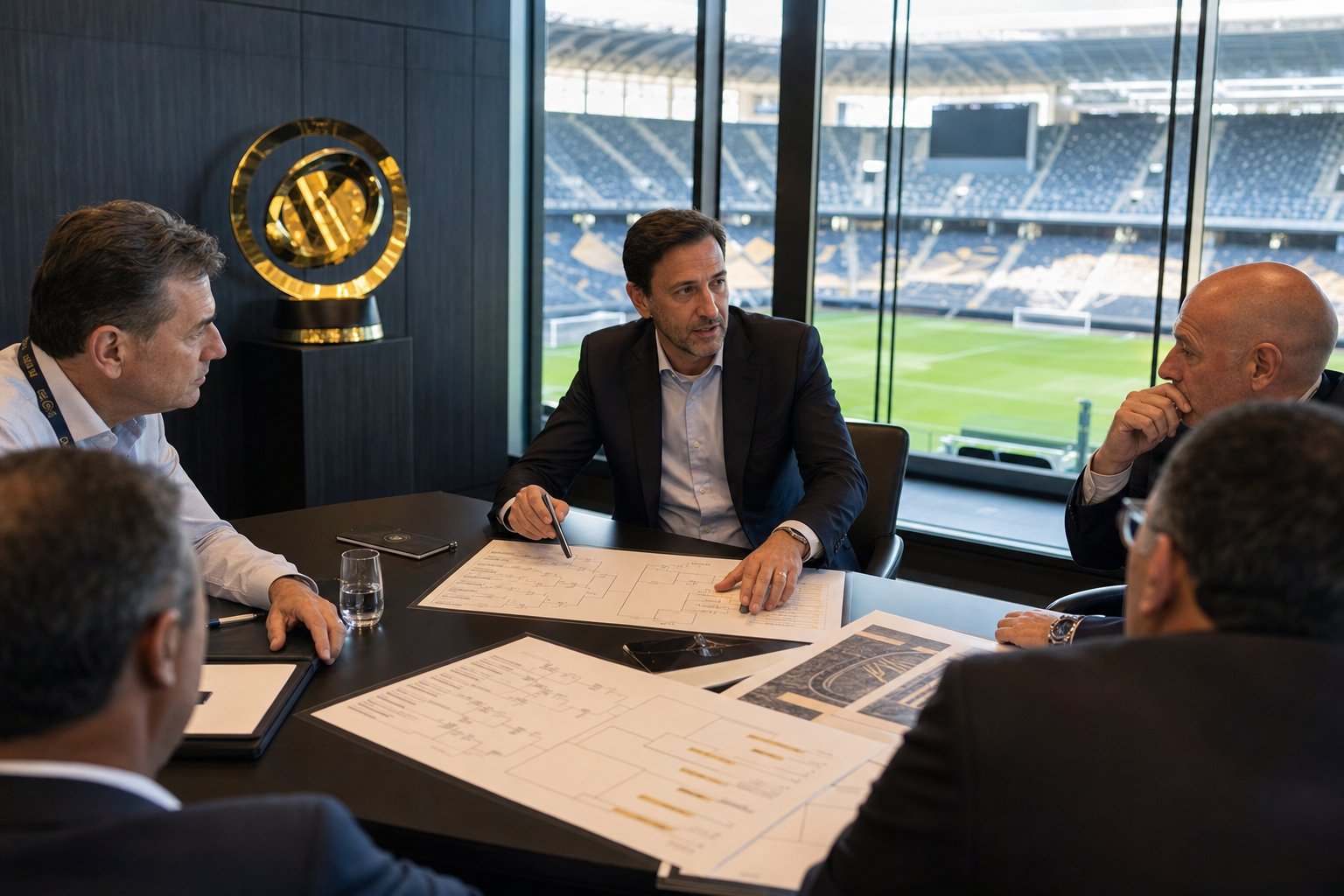
FIFA is moving to a more club-aligned commercial model for the Club World Cup, agreeing a joint venture with the European Football Clubs (EFC) group to manage the tournament, according to The Guardian. The shift matters less for what it changes on the pitch than for what it changes in the contract stack: clubs would be partners in the engine that sells the product, rather than suppliers paid after the fact.
The inaugural edition operated as a 32-team event, with FIFA limiting representation to two clubs per country, and the economics were already material for participants. The Guardian reported that Chelsea’s victory delivered about £84 million and that FIFA has already distributed £740 million in prize money, alongside £185 million due to clubs globally as solidarity payments. Those headline numbers are why governance now matters: when cash flows become meaningful, stakeholders start negotiating for control, not just fees.
The new arrangement mirrors UEFA’s UC3 model, a joint venture between UEFA and European Football Clubs that manages the marketing, sales and delivery of commercial rights for UEFA club competitions. In an Alibaba partnership release, UC3 described itself as the commercial entity overseeing media, sponsorship and licensing rights across UEFA’s elite club competitions. FIFA is effectively borrowing that playbook: put clubs inside the commercialization vehicle, align incentives, and reduce the friction that comes when the organizer holds all the levers.
“Joint ventures are a governance signal,” said a European sports media adviser who works with rights holders and clubs. “When you give clubs a seat at the table that sells the inventory, you shorten disputes over format, access and revenue distribution, because the stakeholders can see the same dashboards.”
That could speed up the next strategic question: scale. The Guardian said the inclusion of EFC is expected to accelerate plans to expand the tournament to 48 teams for 2029, a move that would likely increase the number of Premier League clubs qualifying. Expansion is not just a sporting choice; it is a portfolio decision. More teams can broaden audiences and sponsor inventory, but it can also dilute scarcity and collide with domestic calendars.
For investors and operators, the lesson is straightforward: the next value unlock in global football is increasingly about governance architecture. A joint venture can make revenue-sharing formulas more bankable, improve planning certainty for clubs’ commercial departments, and potentially create a platform for ancillary products such as centralized data packages and betting sponsorship categories. The flip side is that shared control can slow decisions if the shareholder set becomes a parliament.
If FIFA and clubs can use the JV to make the Club World Cup both investable and legitimate, the tournament becomes more than a summer cash grab. It becomes a durable global property whose growth can be justified not only by money, but by mission. That is where sport’s commercial future should point: The Greatest Good. #LITSportsGlobal #TheGreatestGood
中文版
世冠盃合資模式重寫球會話語權
國際足協(FIFA)正把世界冠軍球會盃推向更「球會友善」的商業模式。據《衛報》報道,FIFA已同意與歐洲球會組織 European Football Clubs(EFC)成立合資公司管理世冠盃。這個變化未必立即改變比賽本身,但會改變合約結構:球會不再只是提供內容後收取分成的供應者,而是成為推動產品銷售機器的合夥人。
首屆世冠盃以32隊形式運作,FIFA並限制每個國家最多兩隊參賽,但對參與球會而言,經濟回報已非常可觀。《衛報》指出,車路士奪冠約帶來£84 million收入;同時FIFA已派發£740 million獎金,另有£185 million作為團結金支付予全球球會。當現金流成為可觀資產,談判焦點就會由「拿多少」轉為「誰擁有控制權」。
這套設計與歐洲足協(UEFA)的UC3模式相似。UC3是UEFA與歐洲球會組織的合資公司,在阿里巴巴合作新聞稿中,UC3自述其負責管理、銷售及交付UEFA球會賽事的各類商業權益,包括媒體、贊助及授權。FIFA借鑑同一劇本:把球會納入商業化載體,令激勵一致,並降低賽制、資格及分配爭議所引發的摩擦。
一位長期協助權益方及球會的歐洲體育媒體顧問表示:「合資公司是一個管治訊號。當球會坐進負責售賣庫存的董事會,爭拗會更快落地,因為各方看同一套數據板。」
這亦可能加速下一個策略問題:規模。《衛報》稱,EFC加入預期會推動2029年把世冠盃擴軍至48隊,並可能增加英超球會的參賽名額。擴軍不只是體育決定,而是投資組合決策:更多球隊可擴大受眾與贊助庫存,但亦可能稀釋稀缺性,並與本土賽程衝突。
對投資者與營運者而言,重點很清楚:全球足球下一個價值釋放,愈來愈取決於管治架構。合資公司可令分配公式更「可融資」、提高球會商業部門的規劃確定性,並為集中式數據產品、博彩類別贊助等延伸收入建立平台;但共同控制亦可能令決策變慢,因為股東結構變成議會。
若FIFA與球會能透過合資模式令世冠盃既「可投資」亦更具正當性,賽事就不再只是暑期現金收割,而會成為可持續的全球資產。最終,體育的商業化應以使命作為邏輯終點:The Greatest Good,以及「至善」。#LITSportsGlobal #TheGreatestGood
Published by LIT Sports Global, the Hong Kong sports investment and management group. Open this post in the interactive site · Visit the homepage